Knee & joint pain treatment in Glendale
Knee pain doesn’t automatically mean surgery is the only path. At Inner Movement, we evaluate what’s actually driving the pain — cartilage wear, inflammation, or the muscle imbalances that keep aggravating it — and build a plan from there.
What’s causing your pain?
Osteoarthritis & Cartilage Wear
Osteoarthritis, cartilage wear, and joint pain that’s been building for years.
Meniscus & Ligament Injuries
Usually traceable to a specific twist, landing, or impact — sometimes with catching or instability.
Post-Injury Stiffness
The knee healed, but never fully got its range of motion back.
Referred Pain From Hip or Back
The knee hurts, but the actual problem is upstream.
Arthritis & Joint Degeneration
Osteoarthritis is the most common reason people come to us for joint pain. As cartilage wears down, the joint loses cushioning — bringing stiffness, swelling, and pain that’s often worst in the morning or after sitting.
We can’t reverse cartilage loss. What we work on is the pain, the inflammation, and the mechanics around the joint that make the load worse.
Arthritis affects more than knees — hips, shoulders, hands, and the spine are all common. If you’ve been diagnosed with arthritis anywhere, we can evaluate whether our approaches apply.
How We Can Treat Your Pain
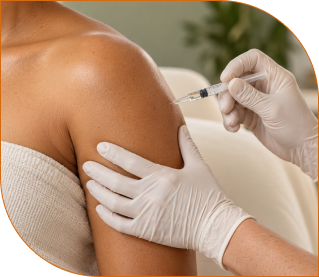
PRP Therapy
Concentrated platelets from your own blood, injected into the affected joint
Learn more →
Frequently Asked Questions
PRP starts with a small blood draw. That sample is processed to concentrate the platelets, and the concentrated preparation is injected into the affected joint. The idea is to deliver a concentrated dose of your own platelets directly to the area. Whether PRP is appropriate depends on what’s driving your knee pain, which is why we evaluate before recommending it. Individual results vary.
For some people, conservative care is enough. For others, surgery is the right answer, and if that’s where you are, we’ll tell you honestly. Decisions about surgery should be made with your orthopedic surgeon.
There’s no standard number — it depends on your condition, how long you’ve had it, and how you respond. Some people notice a difference within a few visits; others need a longer course. We’ll give you a realistic estimate after your evaluation and reassess as we go, rather than selling you a package upfront. If something isn’t working, we’d rather change the approach than keep going.

Most people describe it as a pressure sensation with some discomfort during the injection. The blood draw is like any routine one. Soreness in the joint for a day or two afterward is common. We’ll walk you through what to expect and what to do afterward before you commit to anything.
Related Conditions
Start with an evaluation
Every knee is different. Your first visit sorts out which approach makes sense.