InnerMovement Wellness Center

Shoulder pain treatment in Glendale

The shoulder has the widest range of motion of any joint in your body, which is exactly why it’s so easy to injure. Whether it’s a slow ache from years of overhead work or a sharp catch that showed up overnight, the first job is figuring out which structure is actually involved.

shoulder pain

What’s causing your pain?

Rotator Cuff Strain & Tendonitis

Aching that worsens with overhead reaching, and often at night when you lie on that side.

Impingement

A pinching sensation partway through raising your arm, sometimes with a catch or click.

Frozen Shoulder

Progressive stiffness where the joint won’t move much in any direction, even with help.

Bursitis

Tenderness on the outside of the shoulder, worse with pressure or repeated motion.

Shoulder Arthritis

Deep, stiff ache that’s worst in the morning and grinds with movement.

Referred Pain From the Neck

The shoulder hurts, but the source is the cervical spine — often with tingling into the arm.

Your Shoulder May Not Be the Problem

The nerves that supply your shoulder and arm originate in your neck. When those nerves are irritated where they exit the cervical spine, the pain frequently registers in the shoulder, upper arm, or between the shoulder blades — well away from where the actual problem is.

This is why some shoulder pain doesn’t respond to shoulder treatment. If your pain travels down the arm, comes with tingling or numbness, or changes when you turn your head, the neck is worth examining. Our evaluation checks both, because treating the wrong structure is the most common reason shoulder pain persists.

shoulder pain

What’s your pain pattern?

Painful Arc

Hurts partway up as you raise your arm, then eases near the top. Often points toward impingement or rotator cuff involvement.

Stiff In Every Direction

You can’t move it — and neither can someone else moving it for you. That pattern is characteristic of frozen shoulder.

Pain Down the Arm

Pain that travels past the shoulder, especially with tingling or numbness, frequently originates in the neck rather than the shoulder joint.

These are general patterns, not a diagnosis. An examination is what tells us what’s actually going on.

How We Can Treat Your Pain

Chiropractic Care

Addressing shoulder mechanics and the cervical spine.

Learn more →

Acupuncture

Pain management and inflammation reduction.

Learn more →

Soft Tissue Therapy

Releasing the rotator cuff and surrounding musculature.

Learn more →

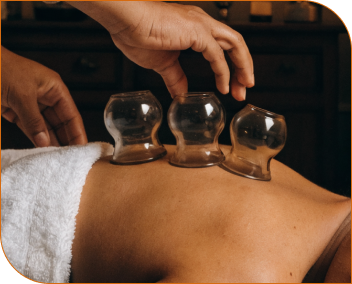
Cupping

For chronically tight upper back and shoulder tissue.

Learn more →

PRP Therapy

For appropriate candidates with persistent joint or tendon injury.

Learn more →

Shockwave Therapy

For chronic tendon pain that hasn’t responded to other care.

Learn more →

Frequently Asked Questions

Why does my shoulder hurt when I lift my arm?

Pain that appears partway through raising your arm and eases near the top is called a painful arc, and it commonly points toward impingement or rotator cuff involvement — structures getting compressed as the arm moves through a certain range. Pain that instead travels down the arm, or comes with tingling, more often originates in the neck. Which one you’re dealing with determines the treatment, so an examination is the useful next step.

What is frozen shoulder and how long does it last?

Frozen shoulder, or adhesive capsulitis, is progressive stiffening of the shoulder capsule. The distinguishing feature is that the shoulder won’t move much in any direction — including when someone else moves it for you, which separates it from most other shoulder problems.

It typically progresses through stages and can take a considerable time to resolve, often longer than people expect. Treatment focuses on maintaining what range of motion you have and managing pain along the way. We’ll give you a realistic picture after evaluating you rather than a number off a website.

Can shoulder pain come from my neck?

Yes, and more often than people assume. The nerves supplying your shoulder and arm originate in the cervical spine, so irritation there can register as shoulder pain. Signs that point toward the neck include pain traveling down the arm, tingling or numbness, and symptoms that change when you turn or tilt your head. This is why we examine both areas rather than treating where the pain happens to be felt.

Do I need an MRI?

Not always. Many shoulder problems can be identified through a physical examination and history — how the pain behaves, which movements provoke it, and what your range of motion looks like. Imaging is more useful when the findings would change the treatment plan, when symptoms aren’t improving as expected, or when a structural injury is suspected. If we think imaging is warranted, we’ll refer you for it.

Can I avoid rotator cuff surgery?

That depends on the injury, and it isn’t something anyone should promise you upfront. Some rotator cuff problems respond well to conservative care — soft tissue work, addressing the mechanics, and treating the surrounding structures. Others, particularly full-thickness tears, may need surgical repair.

What we can do is evaluate what you’re actually dealing with and be honest about the options. If surgery is the right answer for you, we’ll say so, and that decision belongs with an orthopedic surgeon.

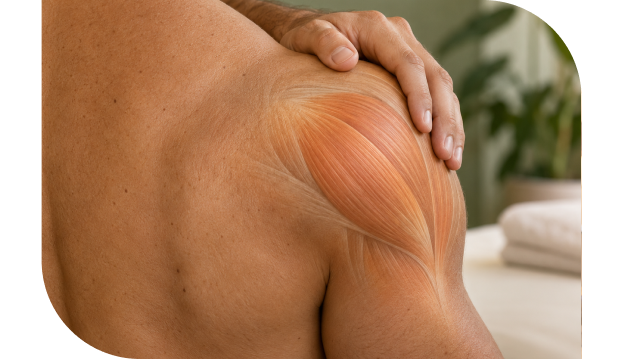
Start With an Evaluation

Your first visit includes a full evaluation of your shoulder limitations.

doctor